Dental Implants in Mount Lawley — Restore Your Smile
A permanent replacement for missing teeth that looks, feels and functions like your own — planned digitally, with sedation available for anxious patients.
The closest thing to getting your natural tooth back
A dental implant is a small titanium post placed into the jawbone to take the place of a missing tooth root. Over the following months the bone grows directly onto its surface — a process called osseointegration — creating a stable, permanent foundation. A custom crown is then attached on top. The result is a tooth that you brush and floss normally, bite with confidently, and that doesn't rely on your neighbouring teeth for support the way a bridge does.
That last point matters more than most people realise. When a tooth is lost, the bone that once held it begins to shrink away, adjacent teeth drift into the space and the opposing tooth over-erupts. Over years this changes your bite, your chewing efficiency and even your facial support. An implant is the only replacement option that transmits chewing forces into the bone and helps preserve it, and unlike a bridge it requires no drilling of the healthy teeth either side.
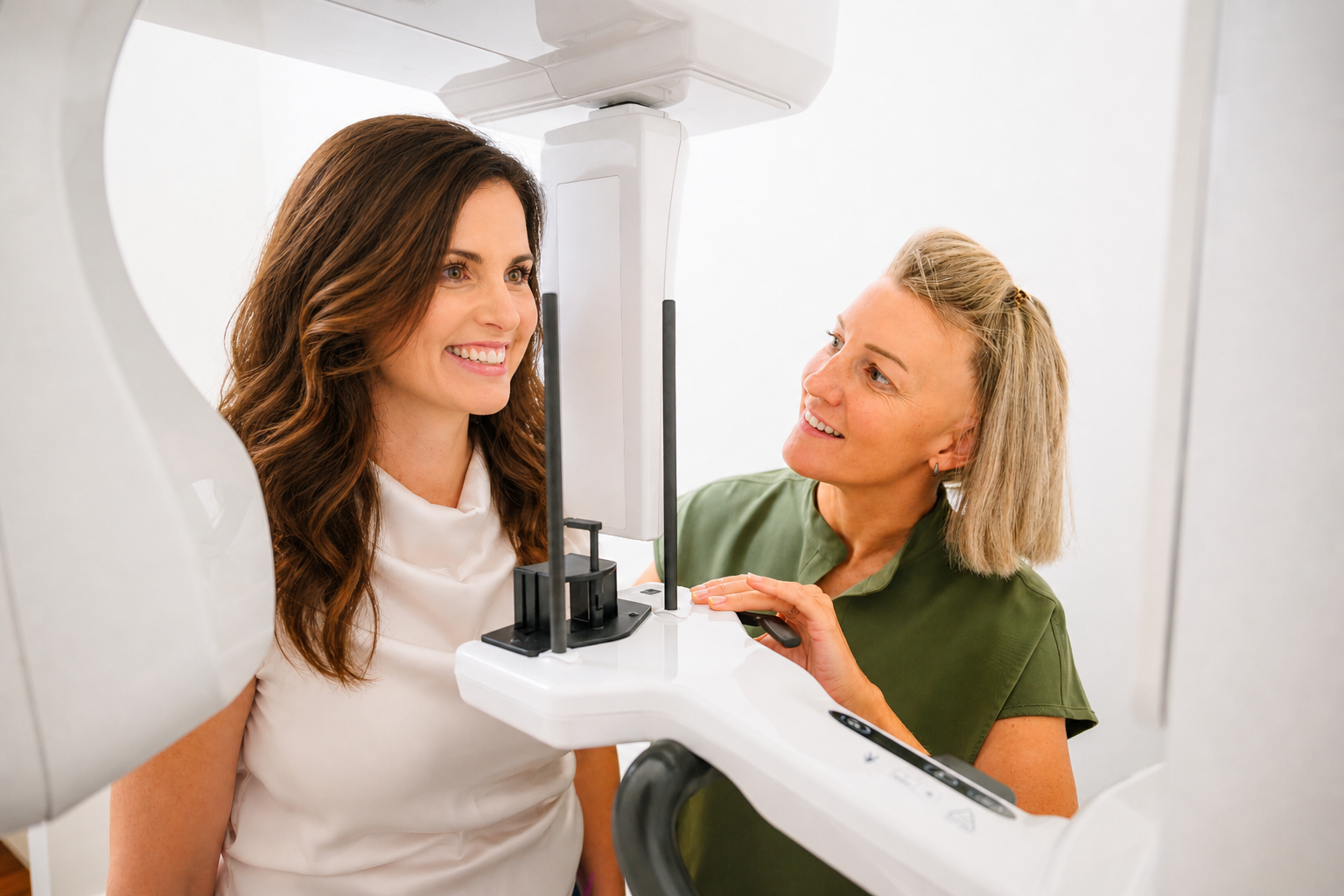
At Dental On Railway every implant case begins with proper diagnostics — digital imaging to assess bone volume, quality and the position of nerves and sinuses — and a clear, staged plan with costs set out before you commit. Dr Simon Frame has over twenty years of clinical experience and further training in digital dentistry and sedation. If the thought of surgery worries you, we offer Penthrox inhaled sedation and twilight IV sedation with a visiting anaesthetist, an option that's genuinely rare in the Mount Lawley area. There's free parking directly across Railway Parade and ACROD accessible parking at our front door.
What We Offer
Treatments & what to expect
Click any treatment to see the step-by-step process we'll take you through.
Single Tooth Implant
One implant and one crown to replace an individual missing tooth, without touching the healthy teeth on either side. The most conservative long-term replacement available.
Multiple Tooth Implants & Implant Bridges
Where several adjacent teeth are missing, two implants can support a bridge spanning the gap — restoring full chewing function with fewer implants than teeth replaced.
Implant-Retained Dentures
Two or more implants can anchor a lower or upper denture so it clips securely into place — eliminating slipping, restoring bite strength and letting you eat with confidence again.
Bone Grafting & Site Preparation
Where bone has resorbed after long-term tooth loss, grafting can rebuild sufficient volume to support an implant. We assess this at the planning stage so there are no surprises later.
Extraction & Socket Preservation
When a tooth must come out, placing graft material into the socket at the time of extraction preserves bone volume and makes future implant placement simpler and more predictable.
Sedation for Implant Treatment
Penthrox inhaled sedation for rapid, self-administered relaxation, or twilight IV sedation with a visiting anaesthetist — a rare offering locally and ideal for anxious patients.
Implant Maintenance & Reviews
Professional cleaning around implants with instruments that won't scratch the surface, plus radiographic monitoring of bone levels to catch peri-implant problems early.
Alternatives — Bridges & Dentures
Implants aren't right for everyone. We'll explain conventional bridges and partial dentures fairly, including cost, longevity and impact on neighbouring teeth, so your decision is informed.
Common Questions
Frequently asked questions
Implant treatment is quoted per case rather than off a price list, because the variables are significant: how many teeth are being replaced, whether bone grafting or a sinus lift is required, whether an extraction is needed first, the type of final restoration, and whether you choose sedation. A single implant and crown typically represents a meaningful investment in Australia, with more complex or multiple-implant cases costing considerably more. What we can promise is complete transparency — after your consultation and imaging you'll receive an itemised written plan covering every stage before you commit to anything. Many patients also have implant benefits under private health extras or major dental cover, and payment plans can be discussed.
Most healthy adults with a fully developed jaw are candidates. The key requirements are enough bone volume to house the implant, healthy gums free of active periodontal disease, and general health that allows normal healing. Uncontrolled diabetes, smoking, certain bone medications and a history of head and neck radiotherapy all affect success rates and need discussion. Insufficient bone isn't necessarily a barrier — grafting can often rebuild the site. The only way to know for certain is a consultation with 3D imaging, where we can measure exactly what's available.
Plan for around three to six months from implant placement to the final crown in a straightforward case. The bulk of that is healing time while the bone integrates with the implant, not appointments — the placement itself is usually under an hour, and you'll have a temporary tooth in the meantime if the gap is visible. If an extraction, socket preservation or bone grafting is needed first, add several more months. Complex full-arch cases take longer and are staged carefully. We'll give you a realistic timeline at your consultation.
The placement is carried out under local anaesthetic and most patients report it as far less uncomfortable than they expected — many say it was easier than having the tooth extracted in the first place. Afterwards you can expect some swelling and tenderness for a few days, generally well managed with over-the-counter anti-inflammatories and an ice pack. For patients with dental anxiety we offer Penthrox inhaled sedation and twilight IV sedation with a visiting anaesthetist, so you can have the procedure in a deeply relaxed state with little memory of it.
The implant itself is designed to be a permanent fixture, and long-term studies report survival rates above 90 to 95 per cent at ten years and beyond when implants are well maintained. The crown on top is a wearing part and may need replacing after ten to fifteen years or so, much like any restoration. The biggest threats to implant longevity are smoking, uncontrolled diabetes, poor oral hygiene and skipping maintenance visits — implants can develop peri-implantitis, a gum-disease-like condition, if plaque is allowed to accumulate around them.
An implant preserves bone, doesn't involve cutting down neighbouring teeth and generally lasts longest, but it takes months and costs more upfront. A conventional bridge is faster and cheaper initially, but requires preparing the healthy teeth either side and doesn't stop bone loss beneath the gap. A partial denture is the least expensive and least invasive option, but it's removable and less stable when eating. There's no universally correct answer — it depends on your budget, timeframe, health and how many teeth are missing. Dr Frame will lay out the honest pros and cons of each.
Much like a natural tooth: brush twice daily, and clean thoroughly around the implant every day with floss, interdental brushes or a water flosser — the area right at the gum margin is the critical spot. Implants can't decay, but the gum and bone around them can become inflamed if plaque builds up, and that is the main cause of implant failure. Regular professional cleans are important too, using instruments that won't damage the implant surface, along with periodic X-rays to monitor bone levels.
It's rarely too late, though the bone in the area will have resorbed to some degree, and how much determines the plan. Digital imaging shows us precisely what remains. In many cases there's still enough bone to place an implant directly; in others, a graft can rebuild the ridge before or at the time of placement. Occasionally the anatomy makes an implant impractical and a bridge or partial denture is the better recommendation. Come in for an assessment and we'll tell you honestly what's possible.
Fill the gap for good
Book an implant consultation at Dental On Railway in Mount Lawley. Digital imaging, a clear staged plan, itemised costs upfront and sedation options if you need them.